

The Hidden Source of Stress in Modern Leadership
We have all heard the humourous lines about stress. One suggests that the greatest source of stress is other people not doing or thinking what we believe they should. Another describes stress as that moment when the mind overcomes the body’s desire to strangle someone who desperately deserves it. Beneath the humour sits an uncomfortable truth.
Much of our stress arises when reality fails to meet our expectations.
For leaders, this gap between expectation and reality is a constant companion. Leadership naturally creates standards, assumptions and desired outcomes. You expect professionalism, accountability, initiative and alignment. You expect people to read the room, apply judgement and anticipate risk. You expect stakeholders to respond rationally and teams to operate cohesively.
Yet modern organisations are not mechanical systems; they are emotional ecosystems. They are filled with individuals who bring different:
- Motivations
- Experiences
- Capabilities
- Risk appetites
- Personal pressures
As complexity increases, so does the likelihood that reality will diverge from what you think should happen. When that divergence is interpreted as incompetence, indifference or resistance, stress escalates.
At the centre of this dynamic is a deceptively simple word: “should.”
They should know this.
They should see what I see.
They should care as much as I do.
They should be performing at a higher level.
“Should” turns an expectation into an assumed universal standard. When reality does not comply, frustration follows.
The Expectation Gap in Modern Leadership
The higher a leader progresses, the more variables they cannot control. Strategy shifts. Markets fluctuate. Teams change. Generational values differ. What once seemed predictable becomes fluid.
In earlier career eras, long tenure within a single organisation often meant leaders operated within relatively stable systems. Today, mobility is higher and organisational structures are more dynamic. Leaders are required not only to drive results but to constantly interpret shifting human and commercial landscapes.
When expectations are rigid and implicit, leaders often experience:
- Heightened irritation at perceived underperformance
- Reduced patience in decision-making
- Emotional leakage in meetings
- A narrowing of perspective
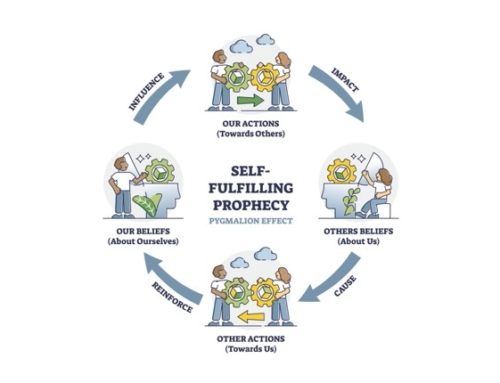
Ironically, these reactions can create the very behaviours leaders dislike: withdrawal, defensiveness, passivity or resistance.
Stress compounds when expectation hardens into assumption.
Adjusting the Lever You Control
If stress lives in the gap between expectation and reality, leaders have two broad levers:
- Attempt to change reality
- Adjust the assumptions sitting beneath expectations
Most leaders instinctively reach for the first. Fewer consciously examine the second.
Adjusting expectations does not mean lowering standards. It means refining interpretation. It means asking:
- Have I made the standard explicit, or merely assumed it?
- Have I developed capability, or presumed competence?
- Have I communicated the “why”, or only the instruction?
- Am I reacting to intent, or to impact?
When leaders move from assumption to inquiry, stress begins to ease.
Curiosity as an Antidote to Stress
A subtle but powerful shift in leadership is the move from certainty to curiosity.
Instead of asking, “Why are they doing this wrong?”
A leader might ask, “What constraint am I not seeing?”
Instead of assuming a lack of commitment, they might explore whether competing priorities are at play.
Curiosity calms the nervous system. Certainty fuels irritation.
When behaviour is interpreted as a threat to competence or authority, the body responds accordingly. When behaviour is treated as data to be understood, the leader retains strategic clarity.
Emotional Maturity at Senior Levels
Leadership amplifies emotion. The more senior the role, the more influence a leader’s emotional state has on culture.
- Frustration sets tone.
- Impatience reduces psychological safety.
- Calm stabilises rooms.
- Measured response builds trust.
When leaders personalise every shortfall, stress becomes chronic. When they diagnose rather than react, stress becomes manageable.
Acceptance is often misunderstood in this context. Acceptance does not mean tolerating poor performance. It means acknowledging, without indignation, what is currently occurring. From that grounded position, leaders can choose an appropriate response: coaching, clarifying, developing, reassigning or, if necessary, exiting.
Reaction narrows judgement. Acceptance expands it.
Practical Ways Leaders Can Minimise Their Own Stress
If reality failing to meet expectation is the trigger, leaders can take deliberate steps to reduce its impact.
- Notice internal “should” language and question its validity.
- Make standards explicit and measurable.
- Separate skill gaps from attitude issues.
- Invest in capability building rather than assuming competence.
- Seek broader context before forming conclusions.
- Pay attention to personal fatigue, as stress is often amplified by physical depletion.
These practices do not eliminate complexity. They reduce unnecessary emotional strain layered on top of it.
The Real Work of Leadership
Modern leadership is less about authority and more about interpretation. Leaders are constantly interpreting behaviour, signals, performance and risk. The difference between chronic stress and sustainable influence often lies in how these interpretations are framed.
When leaders default to “they should know better,” stress escalates. When they shift to “what does this situation require from me?”, effectiveness increases.
The gap between expectation and reality will never disappear. Organisations are dynamic and people are diverse. However, leaders who learn to manage that gap internally, before attempting to correct it externally, preserve their wellbeing and strengthen their impact.
In the end, the only behaviour fully within a leader’s control is their own. And it is in managing that space — between what is and what should be — that leadership maturity is truly tested.







Leave A Comment