

Why organisations are exhausting their people—and what leaders can do about it
Modern organisations operate in a VUCA environment: volatile, uncertain, complex, and ambiguous. Strategy cycles are shorter, restructures are frequent, and employees are asked to adapt—again and again—often while doing more with less.
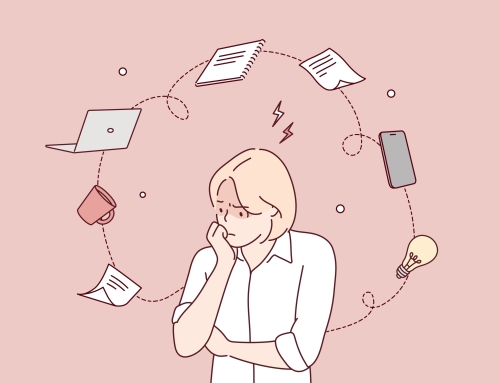
Two related but distinct forms of exhaustion sit quietly beneath the surface of this reality:
- Decision fatigue – the mental depletion that comes from making too many decisions.
- Change fatigue – the emotional and cognitive weariness that arises from continuous, overlapping change.
Both have been extensively studied, with foundational work by Roy Baumeister, whose research on self-control and ego depletion showed that decision-making draws from a finite cognitive and emotional resource. When that resource is drained, judgement, impulse control, and motivation all decline.
In organisations, the ramifications are significant—and often underestimated.
Decision Fatigue: When Every Choice Costs Too Much
Decision fatigue doesn’t just affect senior executives. It cascades through organisations. In environments where:
- priorities shift weekly,
- governance layers are unclear,
- approvals are duplicated,
- and accountability is diffuse,
employees are forced to make constant micro-decisions just to do their job. Over time, this leads to:
- Poorer quality decisions (defaulting to the easiest option)
- Risk avoidance or reckless risk-taking
- Decision paralysis
- Increased reliance on rules rather than judgement
- Lower ethical standards under pressure
Ironically, organisations often respond by adding more controls, approvals, and meetings—further increasing the decision load.
Change Fatigue: When Adaptation Becomes Exhaustion
Change fatigue is less about cognition and more about meaning. It emerges when people experience:
- serial transformations with no visible payoff,
- change initiatives that overlap or contradict one another,
- constant “re-orgs” without stability between them,
- or a lack of narrative explaining why the change matters.
The result is not resistance—it’s disengagement. Symptoms include:
- emotional numbness (“this too shall pass”),
- compliance without commitment,
- loss of discretionary effort,
- cynicism toward leadership messaging,
- and eventually, attrition of capable people who simply stop caring.
In a VUCA environment, this is particularly dangerous because adaptability is the very capability organisations are trying to build.
The Compounding Effect
Decision fatigue and change fatigue reinforce each other. As change accelerates:
- decision volume increases,
- clarity decreases,
- cognitive load rises,
- and trust erodes.
People become tired before the next challenge even arrives. This is how organisations drift into:
- slow execution despite urgency,
- conservative thinking during times that require creativity,
- and leadership teams who mistake exhaustion for resistance.
How Leaders Can Prevent or Relieve Fatigue
- Reduce Decision Load, Not Accountability
Clarify who decides what—and just as importantly, who does not.
- Remove unnecessary approvals
- Standardise repeatable decisions
- Push decisions to the lowest sensible level
- Be explicit about decision rights
Fewer decisions, made closer to the work, improves both speed and quality.
- Create Decision-Free Space
Not every moment needs judgement.
- Use defaults where possible
- Establish clear operating rhythms
- Protect time for deep work
- Limit agenda overload in meetings
Cognitive recovery is not a luxury—it’s a performance requirement.
- Sequence Change Ruthlessly
Organisations rarely suffer from too much change. They suffer from too much simultaneous change. Leaders should:
- pause low-value initiatives,
- finish before starting new transformations,
- and allow consolidation periods where nothing “new” is introduced.
Stability is not the opposite of agility—it enables it.
- Explain the Through-Line
People can tolerate a great deal of disruption if they understand the story. Every major change should clearly answer:
- What problem are we solving?
- Why this change now?
- What will stop or simplify as a result?
Without meaning, change becomes noise.
- Model Decision Discipline at the Top
Leadership behaviour sets the tone. When leaders:
- constantly reverse decisions,
- reopen settled matters,
- or change direction without acknowledgement,
they multiply fatigue downstream. Consistency, even when imperfect, is often more valuable than perpetual optimisation.
A Final Thought
In a VUCA world, energy becomes the scarcest organisational resource.
- Decision fatigue drains cognitive energy.
- Change fatigue drains emotional energy.
Both are predictable. Both are preventable. And both are leadership responsibilities.
Organisations that learn to protect attention, simplify choice, and pace change will not only perform better—they will retain the trust and capability of the people they rely on most.





Dr Susan Roberts says: